Announcing the Upcoming McAllen Poets Laureate

“Do work that matters. Vale la pena.”
-Gloria E. Anzaldúa

I am at a crossroads between crying from pride and laughing because of joy. Ready to let someone share this incredible journey of being a McAllen Poet Laureate, and being tremendously grateful for this experience that has changed my life and taught me so much about my wonderful community. We are a community living through so many transitions that must be documented as we live them, from this side of the Rio Grande Valley border to el otro lado.

I often think of Gloria E. Anzaldúa and the legacy she has left for us, the bonds she has given me with other Valley writers and community activists, and her courage to speak from the heart and soul about her experiences in el valle – the heridas that remain with us even now. To me, this platform representing our community was at times overwhelming, mostly because there were so many opportunities and goals I set for myself. But more often than not, I found how our vibrant literary and arts community had already found ways in which to approach these projects – which made my job that much easier!

There are so many who have mentored me and taken me under their wings along the way, it is almost impossible to list all without failing to forget my peeps! But I can certainly list a few who have inspired me, opened up venues and networks to learn about political and social changes our gente are experiencing, and helped me find my voice along the way: Daniel Garcia Ordaz, Erika Garza Johnson, and Lady Mariposa (their craft for documenting our stories through poetry and letting me learn from them has had the most impact on me as a poet); Olga Valle-Herr (for paving the way as our city’s first poet laureate); Emmy Perez, Dr. Stephanie Alvarez, and Dr. Rob Johnson (their academic and social work, both on campus and in our region, has opened up dialogues that have had a tremendous impact on our region); Kate Horan (who has taught me so much about literacy, how it impacts communities, and has provided me with unconditional support); Jan Epton Seale (Texas Poet Laureate and a mentor as I transitioned into my role as my city’s poet laureate); Dr. Norma Elia Cantú (who has been a literary madrina to so many of us in el valle – I don’t think you understand how much your support and encouragement is valued); and most definitely, our community activists, artists, and organizers who are instrumental in bringing to light social issues one must be vocal about (Sister Norma Pimentel, John-Michael Torres, Veronica Gabriela, Celeste De Luna and many, many others). You all have truly been a blessing!

I have a tendency of going off topic, so let me reel it back in and focus! After having been notified of who was selected to take over as McAllen Poet Laureate, I am typing out this post as an informal announcement. It is my greatest pleasure to announce that not one, but two, of the greatest voices and mentors in our community have been selected to take over the next couple of years! They already have a plethora of projects planned, such as organizing readings, festivals, workshops, writing new literature, etc. They really don’t need much of an introduction…but I definitely will post their bios!

Drumroll…

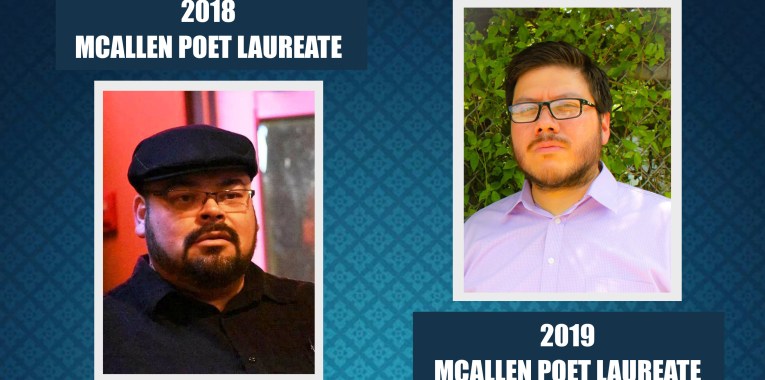
As 2018 McAllen Poet Laureate

23847710_10214699761591772_327974449_oEdward Vidaurre is the author of four books. I Took My Barrio On A Road Trip (Slough Press 2013), Insomnia (El Zarape Press 2014), Beautiful Scars: Elegiac Beat Poems (El Zarape Press 2015), and his latest collection Chicano Blood Transfusion (FlowerSong Books) was published this year. Vidaurre is the founder of Pasta, Poetry, and Vino–a monthly open mic gathering of artists, poets, and musicians. He resides in McAllen, TX with his wife and daughter.


As 2019 McAllen Poet Laureate

RGRodney Gomez is the author of Citizens of the Mausoleum (2018), Baedeker from the Persistent Refuge (2019), and the chapbooks Mouth Filled with Night (winner of the Drinking Gourd Chapbook Prize from Northwestern University), Spine (selected by Ada Limón as winner of the Gloria Anzaldúa Poetry Prize), and A Short Tablature of Loss (selected by Eduardo Corral as winner of the Rane Arroyo Prize). His work has appeared in Poetry, The Gettysburg Review, Blackbird, Pleiades, Denver Quarterly, Puerto del Sol, and other journals. He is the son of migrant farm workers and the first in his family to attend college. A proud member of the Macondo Writers’ Workshop and the Chocholichex writing collective, he was educated at Yale, Arizona State, Berkeley, Cornell, and the University of Texas-Pan American. He reviews poetry and nonfiction for Latino Book Review and works at the University of Texas Rio Grande Valley. He lives with the love of his life, Sara, in McAllen.
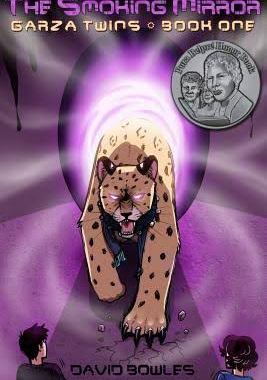

The Smoking Mirror by David Bowles

I have often been told not to judge a book by its cover – and I usually don’t listen. So when I saw the cover for ‘The Smoking Mirror’ by Dr. David Bowles, I knew I had discovered a gem. It doesn’t hurt to know the author is known for the amount of research he puts into his projects, and the charismatic nature of his work makes it almost impossible to put a book down.

‘The Smoking Mirror’ is a Young Adult Fantasy that mixes folklore & mythology with modern day adventures, bringing Aztec/Mayan histories into mainstream pop culture in a most credible scenario for a fictional story. Keep in mind, the plotline is based in South Texas and Mexico, something we don’t often come across is novels. The story is thoroughly relatable to those of us from the border who have family ties in both countries.

Carol and Johnny, twins who have learned their mother has gone missing, are trying to pick up the pieces as their world begins to tumble at home. The twins are your average tweens dealing with issues youth often experience – bullying, doubts, moods, fitting in. The problems at home lead them to an extended stay with maternal relatives in Mexico, away from their home environment and their father. What they don’t know is the journey and revelations awaiting them! Peeling the layers of secrets their mother has kept from them, Carol and Johnny discover they have inherited powers from her and are introduced to their nagual forms – just the fuel they needed to journey into the underworld and search for her, with the help of new friends and allies.

‘The Smoking Mirror’ kicks off a Young Adult book series in a fast paced adventure sure to teach you a thing or two about regional histories often forgotten.

New Border Voices: An Anthology

Borders transition for an array of reasons, time being the indicator of how a new generation comes to rely on the histories of their land(s), reminiscing about what was and accepting (not eloquently though) that change alters realities. This anthology of voices are direct proof of how recent experiences, particularly in the Southwest region, have caused a metamorphosis in our communities. We slowly alienate ourselves from our ties to el otro lado because in our minds, borders close and fears become our distances.

As a fan of many of the prolific authors who form a part of this anthology, I am delighted current reflections from the border are represented well.

Name That Brings Back a Memory: Timbiriche

Timbiriche is the name of a popular 80’s Mexican pop group with the likes of Paulina Rubio, Eduardo Capetillo, Sasha Sokol, and Thalia having been members of it.  Their music still has a great influence on mainstream pop culture.

They remind me of being a kid, visiting Tia Chuy and ‘buelita Linda in Reynosa.  Of the coca-cola bottles fresh outta the ice box and dulces I could buy for a peso from the tiendita near tia’s house.

More specifically, Timbiriche reminds me of my flower girl days and of mi primo Pilarin, a teenage noviero with the hugest celeb crush on Thalia.

Timbiriche reminds of one particular flower girl dress my mother had to put away.  Of being 7 years old and taking a cruise down the streets of Reynosa, being coerced by a handsome primo to sing ‘Si no es Ahora’ as we pretended to be running mandados with the extra time it took us to get back home.  Of his secret novias I could tell nobody about.  Of the Gansitos he bribed me with so I could ask tía to let him take me de paseo, when all it was really for was to visit a new girl he wanted to pay a visit to.

The Quinceañera song reminds me of his silent goodbyes.  Of the news nobody expected as we prepared for his sister’s wedding.  Timbiriche reminds me of those days before his mother’s forever grief.

I can picture her still, sitting in her rocking chair in the wee morning hours as she prepared last minute details for her eldest daughter’s wedding.  I can hear her impatience, knowing something was wrong when her son wouldn’t come home as the morning hours passed. I wasn’t there but I can hear her shrieks when police walked up to her as she sat in that rocking chair, telling her of her only son’s death in a freak car accident.

Timbiriche reminds me of that morning when we learned that instead of a wedding, we should dress for a funeral.

Canicula: Snapshots of a Girlhood en La Frontera by Norma Elia Cantu

La frontera is a mystical region influenced by an embrace of cultures, the lapses of time, the economy of two countries, and the growth that comes with opportunities. To explain it is difficult because so much is lost in the intent, trying to translate a community’s language with the vocabulary that divides our accent. But that doesn’t stop us from trying to share our Mexican/American borderland because our culture is about extending a hand to the world.

Dr. Cantu’s snapshots take us back to a youth where traditions are molded and family is an expected backbone. Her stories are shared, rather than told, and the history tejanos have experienced are documented without boundaries.

Not exactly fictional or autobiographical, Canicula immerses readers into a family’s timeline that spans generations and captures the essence of life bonds.

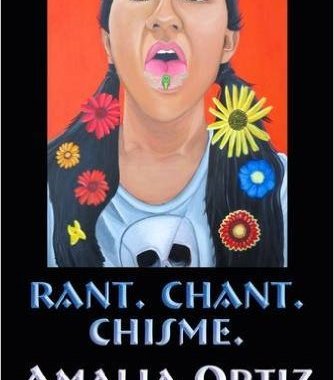
Rant.Chant.Chisme. by Amalia Ortiz

As a child growing up in South Texas, I knew what being a hocicona meant.

It meant you were a repelona who enjoyed arguing. A chismosa who told everyone’s business. A cabrona who often picked a fight. A metiche who put her foot down when nobody asked her opinion.

Mostly, I understood a hocicona to be someone who had something to say and the best part, had an audience to listen to her.

Someday, I want to be an hocicona like Amalia.

Her chismes entertain me like a good Mexican telenovela. Ella suelta la sopa and speaks in volumes through her resonating verses, opening up conversations often suppressed, as with ‘Women of Juarez’ and ‘the short skirt speaks’.

Amalia’s poems remember. They cry. They tell on you. They don’t know how to play hide-and-seek well. They count you in when you try to blend in. And caray, do they speak!

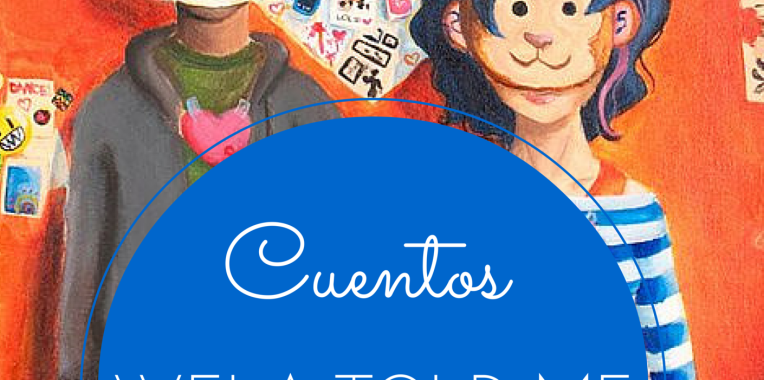
Cuentos Wela Told Me: That Scared the Beeswax Out of Me!

theworldis youroyster.

Author: Priscilla Celina Suarez
Cover Image: Chusy Ocala

Purchase a copy of my new ebook by clicking here!

Have you experienced an eerie chill crawl your skin and give you goosebumps for no apparent reason? Have you been haunted by an apparition you can’t explain? Has your abuelita told you stories about the legendary cucuys that have, for centuries, been a part of our valley folklore?

These stories are simply cuentos many are skeptical to believe in. Leyendas my family has shared with me.

It is up to you to decide whether to believe in these stories or not. Regardless, they are intriguing and will continue to be told for generations on end.

Read on, enjoy, and beware of the cucuys!

Save

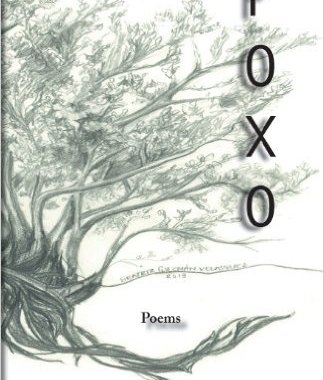
Poxo by Isaac Chavarria

Desarraigados are those of us who have been uprooted and confused by the theories of fronteras. Confused by labels and labeled because it is logical. Regional subcultures mess us all up – so how can we associate with labels that marginalize the distinctiveness or our South Texas community?

It’s a conversation meant to have us running in circles. Jumping from being Hispanic or Latino to being Chicano, possibly Mexican-American or Tejano. I’ve lived all these labels without ever truly owning them. Sometimes, it’s all about the occasion.

And that’s what I appreciate about Isaac Chavarria’s collection of poems. In reading Poxo, I was able to identify with the author’s jumble of lenguajes, never settling between one world and the other. Aware that he can distance himself from one root and never be able to branch away from it.

Tristes Recuerdos: My Primo Eddie

There is something about primos in my family that embraces all aspects of my life. They are my best friends. My worst enemies. My sidekicks and my lifelines. They have been the bad influences and have given me the greatest heartaches.

The idea is that we will grow old together and be tíos and tías to each other’s kids, our kids being each other’s primos. We want for them to experience the essence of belonging to a big Mexican family – or, Tex-Mex, in their case.

Our favorite memories seem to include one primo or another, and a tejano, corrido, or norteño song. For us, that has to include Ramon Ayala. Ramon has been there with us from since I can remember.

At Christmas, he’s there in the newspapers with his ever famous party and toy drives. At parties and bailes, he’s there with his Tragos Amargos and what not. Boots stomping a tipsy step, step. Hats waiving in the air. Voices belting out the tune – if not tipsy yet, drunk because of the song. He was there at my quinceañera with his verses coming from a band that played an imitation of his song. Not cheap, the emotions were all there. Maybe just not original.

Ramon Ayala is there all those times mis primos and I are together, enjoying what has been more than a friendship and a blood bond. My family, mis primos, they aren’t just my best friends. They’re keepers of my past and the backbone that’s there any time I’ve needed them.

Ramon Ayala, he has been there to witness everything, and to make it all more emotional. He was there the day Eddie died, with his Tragos Amargos. He was there the day we buried my primo, with his Un Rinconcito en el Cielo. Ramon was there all those days afterwards that we mourned his death and had only each other, primos and primas, dealing with the greatest loss we’d ever dealt with.

That is the roughest part of listening to Ramon Ayala when I tune in to his music while trying to get work done. The ambient is always there reminding me of my primo Eddie. Of his young life taken without giving us a chance say goodbye. Of all those signs that could’ve been read beforehand, the superstitious nuts we are. The mirror falling when he touched it a couple of days before he died in that horrible car accident. Him asking his mother what death was like just a few days before. Him trying to get us together one last time. It was always him. And it is him that I’ll always remember with the Tristes Recuerdos that Ramon sings.

I swear to you, that day we buried him, when the mariachis played Eddie’s favorite music – Ramon’s music – I swear to you that we all felt him there. Maybe kicking back his legs a little, stomping down his boots. With a step, step. A black hat flying in the air, chiflando and singing. His bootie shaking just a little.

And a vuelta here.

And a vuelta there.

Invisible Borders

Deslenguadas. Somos los del español deficiente. We are your linguistic nightmare, your linguistic aberration, your linguistic mestizaje, the subject of your burla. Because we speak with tongues of fire we are culturally crucified. Racially, culturally and linguistically somos huerfanos – we speak an orphan tongue.”  — excerpt from Borderlands, Gloria Anzaldua

I was eight years old the first time I was taught to be ashamed of my language. Growing up in a household on this side of the frontera, it wasn’t strange for my parents to choose teaching me their primary language when it was what everyone in our community spoke. Sometimes a bit of English, but with our raza, it was either Spanish or Spanglish.

My parents were (are) pochos and grew up in America as migrant farmworkers, traveling the nation every year for work opportunities and witnessing firsthand discrimination towards their language and skin color. But it wasn’t only from those unlike them that they experienced the burlas. What was worse was that it would be from mejicanos like them that didn’t have to live their childhood working in the labores or go to school in the migrant portable rooms, where they were labeled as outcasts of the regular school system. Mejicanos like them that didn’t have papeles and spoke with an accent in their everyday lives. Eating the same type of meals but yet, felt superior because they didn’t have to come to school smelling like cebolla and prietos from the valley sun.

I remember listening to my mother and brother speak in English, with no idea as to what they were saying. I was curious, for sure. I’ve asked my parents why they chose to speak only Spanish in our household when we were kids, and they insist it is because they knew the opportunity had to be seized- you see, they knew that eventually, our way of being would become Americanized.

Moving school districts from PSJA to McAllen was a major shock to my younger brother, Luis, and me. Moving from a school where all other children were Spanish speakers like me, to a school where ESL students were placed in a portable that separated them from the ‘regular’ students. There were about 7 other kids in my particular grade level, our connection instant because we were unlike the others. We were children and naive, but we understood why we couldn’t be with the other kids. Our lunches, library visits and PE classes always consisted of us being in the corner.

That is my memory.

It took me less than six months to assimilate with the English language and move into a ‘regular’ classroom. After that experience, I decided to speak only in English when in school and around my friends. Peer pressure to fit in, I suppose. But I still had the environment of our frontera culture to let me fit in with my relatives on the other side, in Reynosa.

Times have changed. It’s been almost five years since the last time I crossed the frontera, and what saddens me most is realizing my nieces and nephews will never know the frontera as I do. Their world only consists of este la’o and they have never met or visited la familia in Mexico.

Not because of a physical border, but that invisible border called fear.